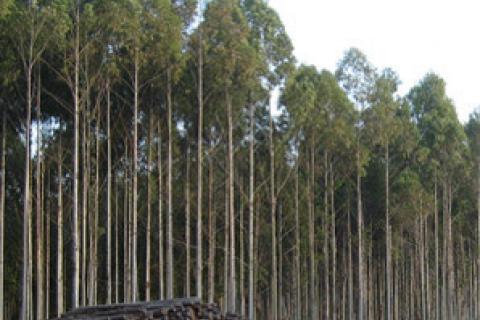
This report -by Anne Petermann and Orin Langelle, Global Justice Ecology Project- examines events and research publicized between 23 June and 4 July 2019 that discuss the mass-use of trees to enable the unsustainable lifestyles of the world’s top 1% in the face of looming ecological catastrophe: from trees genetically engineered to feed the “green” manufacture of energy, plastics and chemicals; the planting of trillions of trees to reduce global atmospheric carbon levels; and “reforms” to the economic system to allow future profit-making under the guise of biodiversity pr
Other information

An inteview with Winnie Overbeek, the International Coodinator of the WRM, about the causes and the impacts of the deforestation in the Amazon.
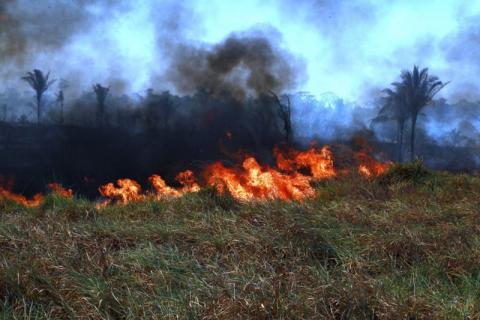
It should be clear for society that this is not an isolated phenomenon. In fact, it is the result of a series of actions taken by agribusinesses and big miners.
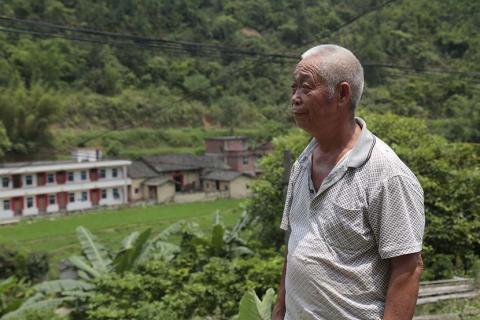
In a context of a thriving eucalyptus plantations industry in China, around 150 Yong’an residents are suing both Guangxi Lee & Man Forestry Technology Ltd. — the timber company that operates the nearly 300,000-square-meter eucalyptus plantation — and the local government body that partnered with it, for violating a clause in Chinese contract law that bans businesses from damaging public interests. Villagers claim the eucalyptus sucks up water from three mountain springs, leaving little for them to use for cooking and rice farming farther downstream.
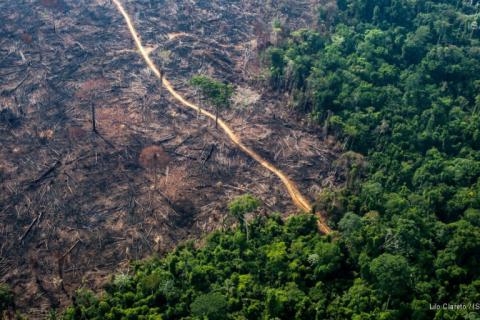
The study, “Amazonía en la encrucijada” (“The Amazon at the Crossroads”), by the Amazon Geo-Referenced Socio-Environmental Information Network (RAISG, by its Portuguese acronym) presents an overview of the pressure caused by roads in Brazil, Bolivia, Colombia, Ecuador, Perú and Venezuela. According to the report, of the 136,000 kilometers of roads mapped in the region, at least 26,000 are in protected natural areas and indigenous territories. For example, in the Brazilian Amazon, the report states that most deforestation occurs in the vicinity of roads.
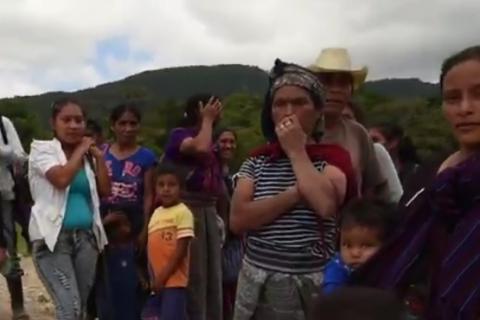
In the Yich K’isis region of Guatemala, the construction of three hydroelectric dams has been planned: Pojom I, Pojom II and San Andrés. These dams will receive water by diverting the Negro, Pojom, Yalwitz Primavera, Varsovia and Palmira rivers. Communities are struggling to resist the imposition of these dams; this led to the death of a community member in 2017. A short video from the Avispa Midia news portal shares the voices of the women and men in the struggle to defend their territories and lives.

Under the ISDS (investor-state dispute settlement) parallel justice system for corporations and the rich, companies can sue countries when they think that government decisions or court rulings – even ones whose explicit aim is to protect people or the environment – affect their profits. These lawsuits bypass domestic courts and take place before an international tribunal of arbitrators: essentially three investment lawyers who decide whether private profits or public interests are more important.
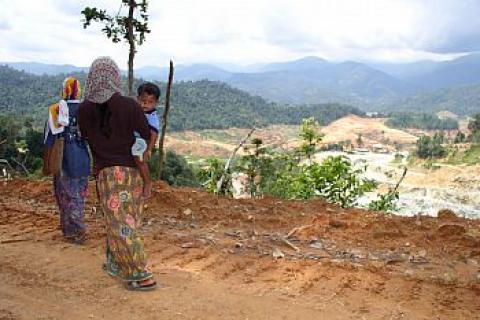
A paper from researcher Carol Yong critically reviews issues of dam-induced displacement and resettlement of indigenous communities in Malaysia from a gender lens.To understand why compulsory land acquisition is traumatic for rural indigenous peoples within the larger context of dam displacement in Malaysia, it is important to understand customary land rights and tenure systems, the role of adat (customary law) in the regulation of such rights, and what land means to both women and men.
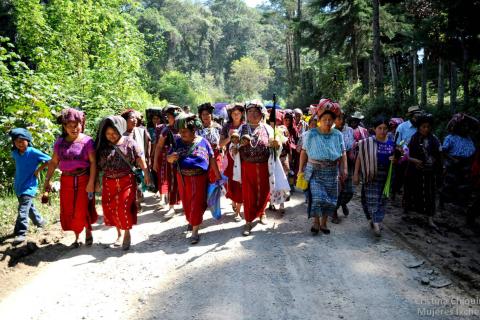
Despite the many profound damages that industries cause in the world’s forests, they also cause something else to emerge: the strong and diverse resistance movements of affected communities defending their territories, livelihoods, cultures and even their existence.
The bulletin "Voices From The Ground: Communities In Movement And Resistance Strategies", N° 241, is available in Swahili.

Only available in Spanish.
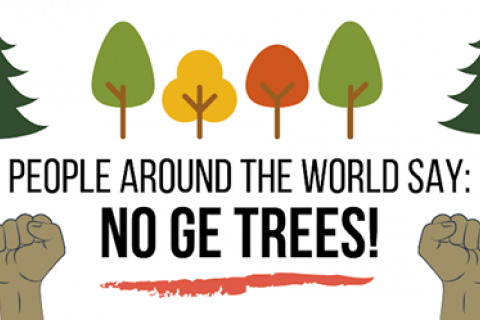
The global Campaign to STOP Genetically Engineered Trees is in Raleigh, NC during the 2019 Tree Biotechnology Conference of the International Union of Forest Research Organizations (IUFRO).